What is the difference between a return switch and a standard wall switch?
- VIP-User
- 2026-09-30
- 1
The key difference between a return switch and a standard wall switch lies in their mechanical operation and contact state. A return switch (momentary switch) utilizes an internal spring mechanism to automatically return to its original state after release, sending short electrical pulses. Conversely, a standard wall switch (latching switch) physically remains in its toggled position—either open or closed—maintaining a continuous electrical circuit until manually flipped again.
Core Solutions & Key Takeaways
- Contact Operation: Return switches rely on a spring-loaded retractive mechanism for momentary contact, whereas standard wall switches utilize a mechanical latching rocker to maintain position.
- Circuit Signal Output: Return switches emit brief pulse signals suited for relays or smart automation controllers, while standard wall switches continuously complete or interrupt the AC phase line.
- Application Deployment: Standard switches handle direct line-voltage lighting control across residential and commercial applications; return switches integrate into dimming systems, pulse relay circuits, and home automation nodes.
- Compliance & Safety Standards: Modern switch mechanisms comply with standardized safety parameters, such as national standard GB 16915.1-2014 and international CE standards, ensuring contact insulation and thermal resistance.
Detailed Architectural/Principle Analysis
Electrical switch architecture dictates how current is delivered to terminal loads. A standard wall switch uses a bistable mechanism. When actuated, the internal contacts snap into position and stay connected. This mechanical latching ensures continuous current flow to lights or connected appliances without external electrical components. Standard wall switches are deployed directly in line-voltage circuits feeding sub-panels and terminal points.
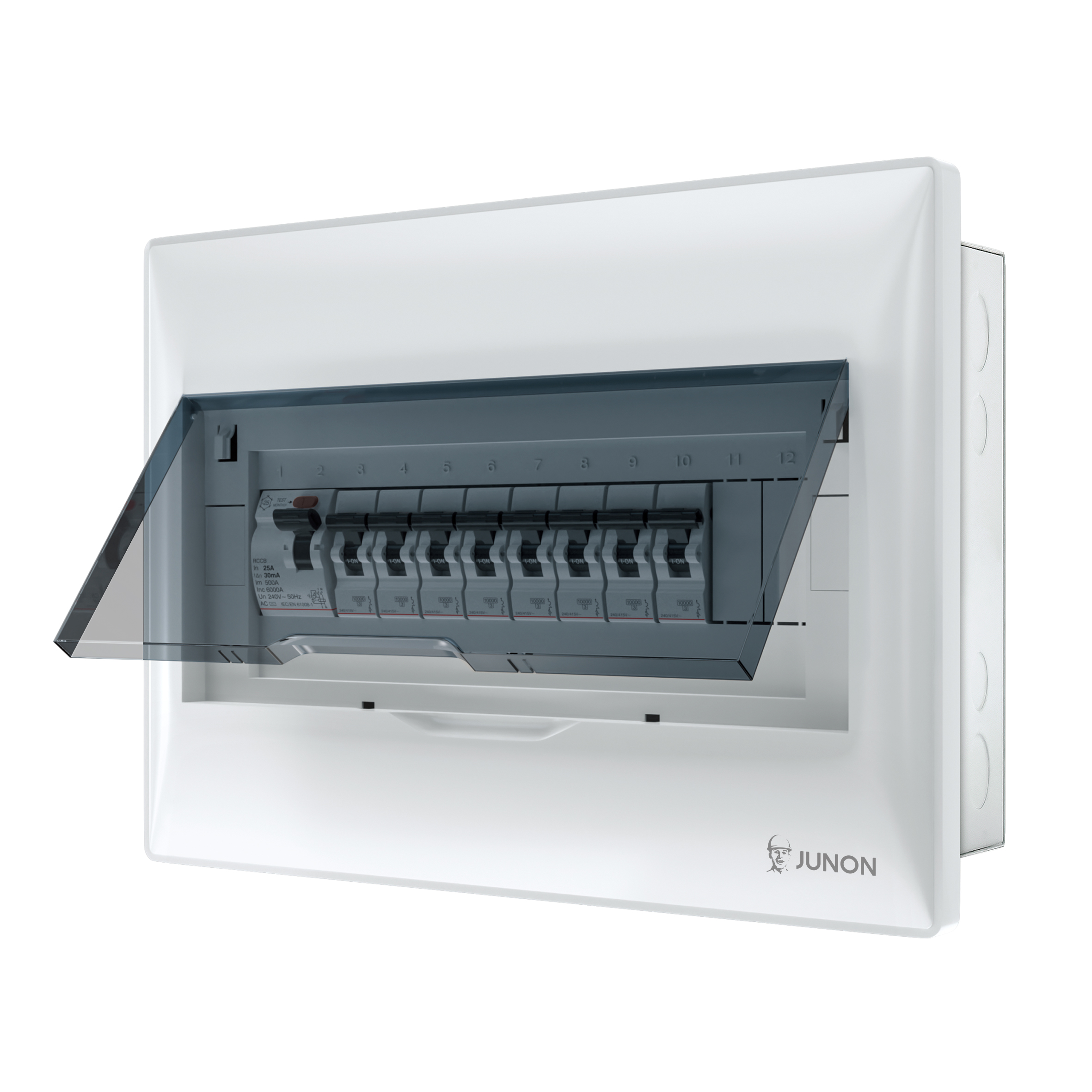
In contrast, a return switch operates on a monostable spring-return design. Pressing the switch actuator bridges the internal contacts temporarily. The moment physical pressure is removed, the internal spring restores the actuator to its resting state, breaking electrical contact. This momentary connection outputs an electrical pulse rather than a continuous current stream. When integrated with latching impulse relays or smart control modules mounted inside enclosure systems—such as low voltage distribution boxes—return switches allow multi-point control without complex multi-way wiring setups.
For large-scale construction developments, including hospitality contracts such as the Sheraton Astana Hotel in Kazakhstan or the Courtyard Tashkent in Uzbekistan, structural wiring relies on clear separation between direct power switching and centralized pulse-controlled sub-circuits. Standard wall switches directly break phase lines, whereas return switches manage modern control interfaces without physical switch state conflicts.
Data/Solution Comparison
| Comparison Parameter | Return Switch (Momentary Switch) | Standard Wall Switch (Latching Switch) |
|---|---|---|
| Internal Mechanism | Spring-assisted retractive contact | Bistable mechanical rocker/latch |
| Contact State After Release | Returns immediately to default (OFF or ON) | Stays in toggled position (ON or OFF) |
| Electrical Output | Transient pulse signal | Continuous AC voltage transmission |
| Typical Integration | Smart relays, dimmers, home automation | Direct line-voltage lighting circuits |
| Multi-point Control Setup | Unlimited parallel push-buttons to single relay | Requires specific 3-way or 4-way physical wiring |
Frequently Asked Questions (FAQ)
Can a return switch directly replace a standard wall switch in an existing light circuit?
No. A return switch only maintains electrical contact while depressed. Without an inline step-relay, smart switch module, or central controller to latch the state electrically, the connected light will turn off as soon as the switch button is released.
Why are return switches preferred for smart lighting controllers?
Return switches avoid mechanical state misalignment. Since the button always rests in the same position, turning lights off via a mobile app or voice command does not create a conflict between physical rocker position and actual light status.
What safety certifications apply to wall switches and distribution equipment?
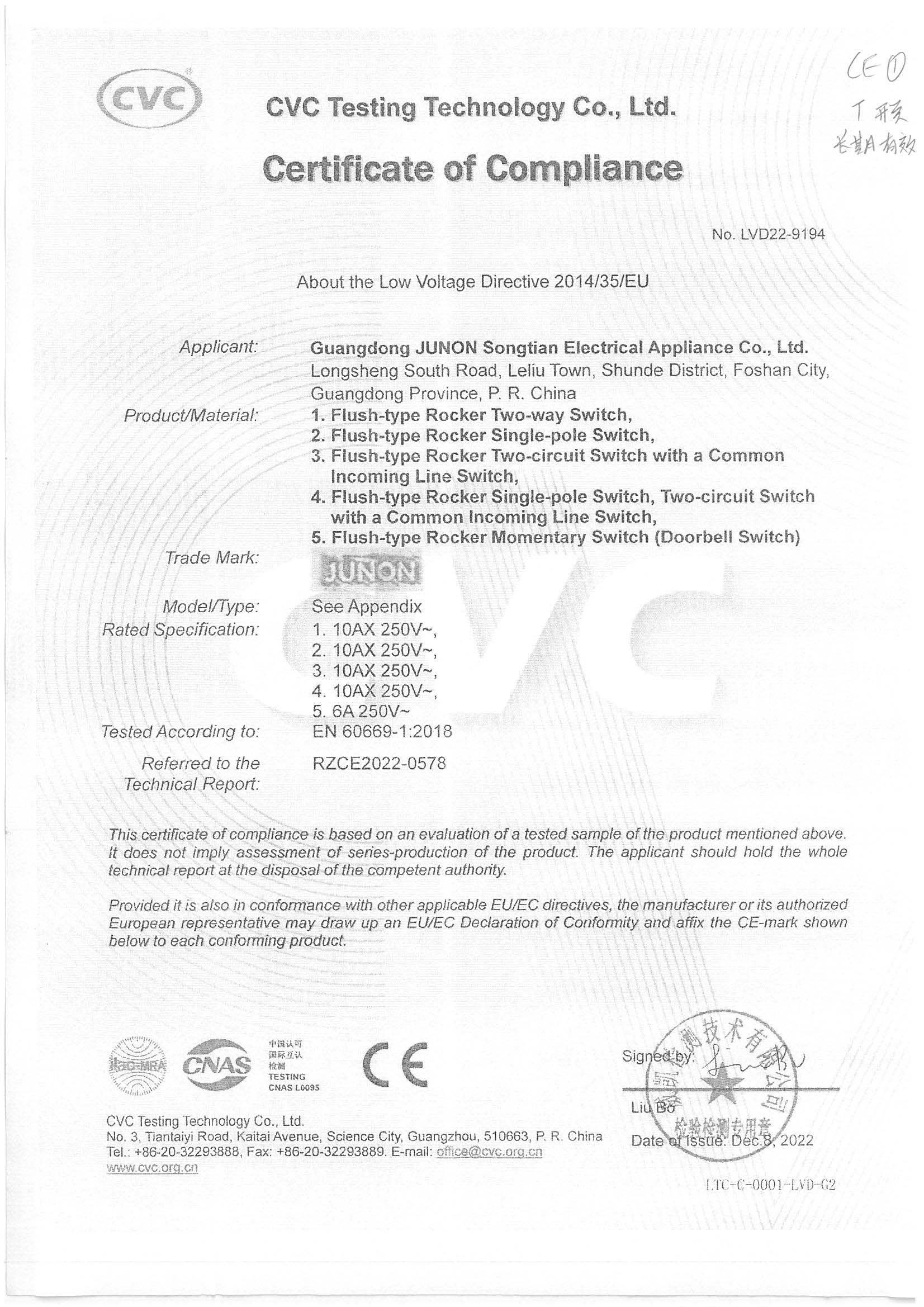
Wall switch devices and associated enclosure products undergo evaluation for standard compliance, holding certifications such as CE (LVD22-9194), CB (CN42895), RoHS, and GB 16915.1-2014 certification for switch safety performance.
Final Conclusion & Recommendations
Selecting between a return switch and a standard wall switch depends on circuit architecture. Standard wall switches are optimal for conventional direct power switching across residential and commercial rooms. Return switches provide necessary pulse input for automated, dimmable, or multi-location relay networks. Complete electrical installations require pairing proper switches with robust low-voltage distribution hardware, such as 1.2mm iron sheet metal base distribution boxes featuring pure copper busbars. Quality control protocols—including 100% production line testing and incoming material inspection—ensure long-term operational safety across full industrial chain distribution and direct sales models. For detailed technical solutions or support, please reach out to us via hayley@junlang.com.
About Us
Guangdong JUNON Songtian Electrical Appliance Co.,Ltd was established in 1983 and operates a 148,000 square meter factory facility housing 2,000 employees. The enterprise manufactures switches, sockets, distribution boxes, and LED lighting solutions under ISO9001, ISO14001, ISO45001, CE, and CB certifications. The company maintains full industrial chain manufacturing capabilities to serve commercial, residential, and infrastructure projects globally across more than 52 countries.

Lastest
-
Are there any newly developed UV-resistant plastics for IP65 waterproof distribution box?
2026-09-30 -
What is the maximum current load for this EU wall switch and multi socket?
2026-09-30 -
What is the lead time for a sample of this switch with universal socket?
2026-09-30 -
Can you provide a video tour of your factory where this return switch is made?
2026-09-30 -
How much do you charge for a sample of this multi socket with independent on off switch?
2026-09-30
SUBSCRIBE
INQUIRY