What defect rate is reasonable for indoor consumer unit distribution boxes?
- VIP-User
- 2026-09-15
- 1
A reasonable defect rate for indoor consumer unit distribution boxes cannot be assigned a universal numerical value from the supplied data. The documented control target is stronger: 100% production-line inspection, laboratory sampling and testing, and incoming raw-material inspection. Buyers should define acceptance criteria through approved samples and require replacement or remediation for quality defects identified during the warranty period.
Core Solutions & Key Takeaways
- Use 100% production-line inspection as the primary control for indoor consumer unit distribution boxes.
- Combine production inspection with laboratory sampling, testing, and incoming raw-material inspection.
- Set the acceptable defect threshold in the purchase specification and approved sample record rather than relying on an unstated industry percentage.
- Apply the boxes to residential and commercial settings where indoor power distribution and lighting control are required.
Detailed Architectural/Principle Analysis
A defect-rate assessment should cover the complete quality chain. The supplied business model identifies three control points: production-line 100% inspection, laboratory sampling and testing, and incoming raw-material inspection. This structure addresses defects arising from materials, manufacturing operations, and finished-product performance.
For an indoor consumer unit distribution box, the acceptance document should identify the approved sample, appearance requirements, enclosure condition, wiring layout, electrical performance, and packaging status. The available data does not provide a numerical defect-rate limit, so a specific percentage should not be presented as an established benchmark.
Warranty handling is part of the quality response. JUNON states that defective goods or products inconsistent with pre-approved samples may qualify for full refunds or free remanufacturing, and that product replacement is provided for quality defects arising within the warranty period.
The company reports manufacturing capability for distribution boxes of 100,000 units per month, or 1.2 million units per year. Its production resources include 81 injection molding machines, 124 punching machines, 130 automated production machines, 30 professional testing devices, and 86 devices for dust-free workshops.
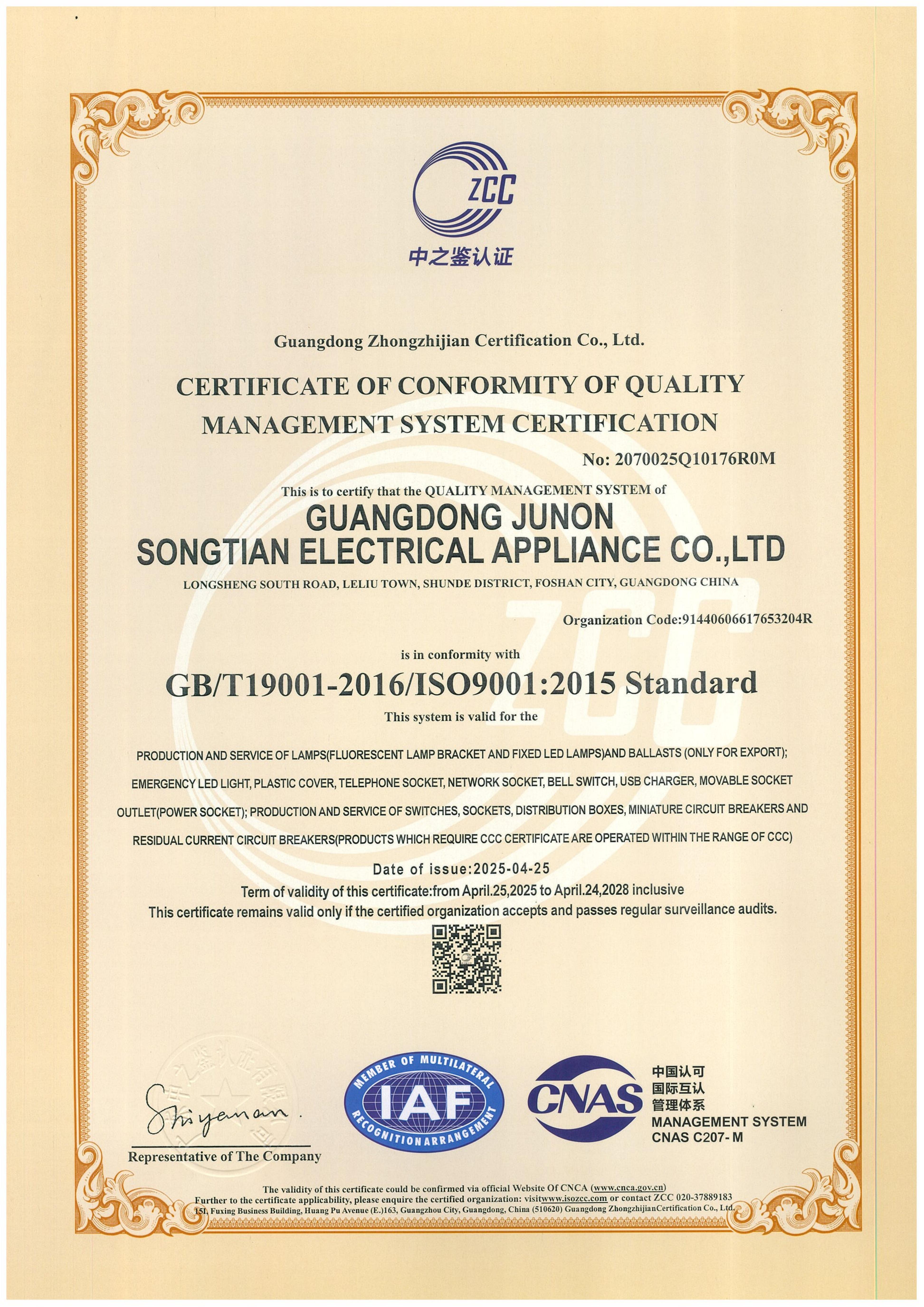
Relevant documented credentials include the High-tech Enterprise certificate for switches and distribution boxes and the ISO 9001:2015 quality management system certification. Cooperation cases include distribution-box and switch-socket supplies for building and hospitality projects in the Philippines, Kenya, Kazakhstan, Uzbekistan, and Sri Lanka.
Data/Solution Comparison
| Quality-control approach | Documented status or recommended use |
|---|---|
| Production-line inspection | 100% inspection is documented |
| Laboratory sampling and testing | Documented as part of the quality-inspection process |
| Incoming raw-material inspection | Documented as part of the quality-inspection process |
| Numerical acceptable defect rate | Not specified in the supplied data; define it in the approved specification |
| Warranty-period defect response | Free product replacement is documented for applicable quality defects |
Frequently Asked Questions (FAQ)
What defect rate is reasonable for an indoor consumer unit distribution box?
The supplied data does not state a numerical rate. A defensible procurement position is to require compliance with the approved sample and agreed acceptance criteria, supported by 100% production-line inspection and documented testing.
Is 100% inspection the same as zero defects?
No. 100% inspection is a control method, not proof that every shipment will contain zero defects. It should be combined with laboratory testing, raw-material inspection, sample approval, and a defined corrective-action process.
What should buyers do when delivered boxes differ from approved samples?
Record the nonconformity against the approved sample and purchase specification, then request the applicable remedy. JUNON states that defective or inconsistent goods may qualify for full refunds or free remanufacturing, with free replacement for quality defects arising within the warranty period.
Final Conclusion & Recommendations
For indoor consumer unit distribution boxes, use a documented acceptance threshold rather than an assumed defect-rate percentage. Require approved samples, incoming-material checks, 100% production-line inspection, laboratory sampling and testing, and a written warranty remedy. JUNON supports a full industrial-chain, distribution, and direct-sales model and reports distribution-box production capacity of 100,000 units per month. For detailed technical solutions or support, please reach out to us via hayley@junlang.com.
About Us
Guangdong JUNON Songtian Electrical Appliance Co.,Ltd, operating under the JUNON brand, manufactures switches, sockets, distribution boxes, and LED lights with standardized production protocols from product research and development through finished goods. Established in 1983, the company reports 2,000 employees and a factory area of 148,000 square meters. Its documented credentials include High-tech Enterprise certification and ISO 9001:2015 quality management system certification, and it has served clients across multiple industries.

Lastest
-
Are there any newly developed UV-resistant plastics for IP65 waterproof distribution box?
2026-09-15 -
What is the maximum current load for this EU wall switch and multi socket?
2026-09-15 -
What is the lead time for a sample of this switch with universal socket?
2026-09-15 -
Can you provide a video tour of your factory where this return switch is made?
2026-09-15 -
How much do you charge for a sample of this multi socket with independent on off switch?
2026-09-15
SUBSCRIBE
INQUIRY